
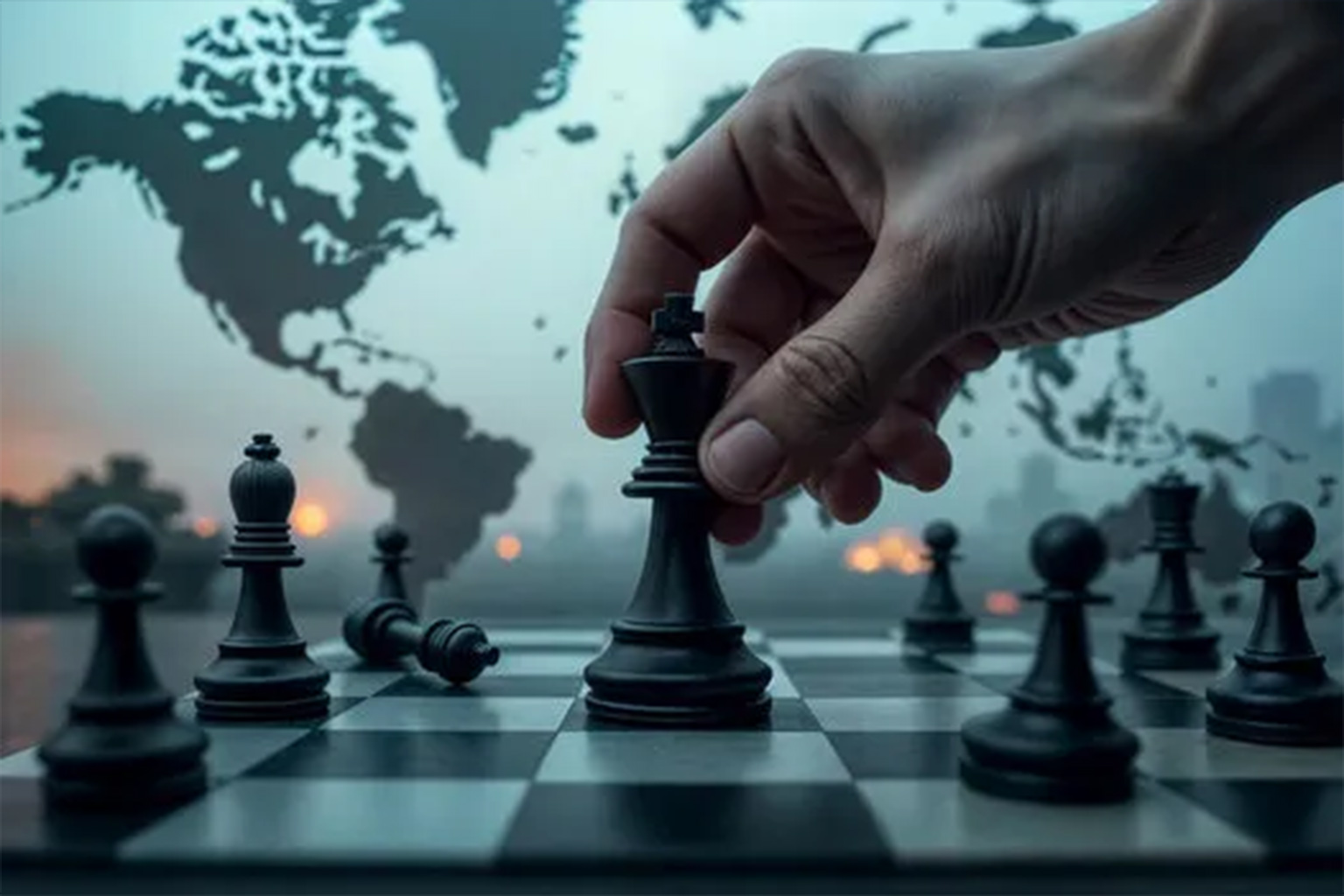
Former President Trump’s audacious proposal to acquire Greenland was originally considered the rambling of one many consider to be a madman and that others consider a hero. The idea was met with laughter and skepticism. Yet, beneath the surface of this seemingly whimsical idea lies the dark reality of a geopolitical chessboard that we all live and play on. A chessboard often dominated by various countries, diplomats, oligarchs, and corporate lords, but with regard to Greenland and the Arctic, it is, in fact, dominated by the aggressive maneuvers of Russia and China.
Territorial expansion, particularly with Greenland, clashes violently with the ideals of diplomacy and cooperation that we so often champion. The United States often assumes the role of the global aggressor in the minds of many here at home. Yet, we cannot look away from the hard truth: the world is changing, and we are at a tipping point.
Russia’s Expansion of Influence and its Arctic Military Build-up
Look at Russia’s military build-up in the Arctic. This isn’t just a game of posturing. With new bases rising in remote territories like Franz Josef Land, Moscow sends a clear signal that it aims to dominate this strategic region. Analysts like Francesco S. T. Gardi warn that these moves are not simply displays of might but calculated strategies to stake claims on the vast wealth hidden beneath the Arctic ice. This treasure trove of natural resources would drastically bolster the current ruling administration’s strength which is why Russia is pushing projects like the Yamal LNG plant, which symbolizes its unrepentant pursuit of energy and power.
In Eastern Europe, Russia’s actions unveil a campaign of destabilization. Since the annexation of Crimea in 2014, it has waged hybrid warfare involving cyber-attacks and disinformation campaigns aimed squarely at countries like Estonia and Latvia, threatening not just democracy but the very fabric of peace. It is not far fetched to assume that if given Greenland, Russia would use it or resources ascertained in the Arctic to fund other such activities.
For Trumps second stated threat to Greenland we have China, whose ambition in the Arctic is evident through its Polar Silk Road initiative. Scholars like Dr. Anna V. Koller have pointed out that China isn’t just talk; it has an aggressive strategy to carve out a place for itself in global trade that could shift the balance of power through increased influence in Arctic regions.
Nations like Hungary and Serbia are now key players in this shifting landscape, engaging with China through the Belt and Road Initiative and creating a scenario where an alliance of nations could tip the scales against the West. This 17+1 initiative speaks volumes. It is not assumed; it is proven. These actions threaten what little peace we have left, a peace that Russia denies its citizens and a peace that China withholds from the Uyghurs, the Taiwanese, and the beleaguered residents of Hong Kong.
The Situation is Bleak Because of Who’s Affected
If the Arctic is controlled through Greenland, then Ukraine, a slew of other smaller European countries, Taiwan, the Uyghurs, and more will suffer under already oppressive regimes that will see their powers increased. Often, we see the U.S. as the provocateur at home, but abroad, the countries we claim to defend yearn for refuge from their own rulers, viewing the U.S. and non-communist countries as safe havens. While we shouldn’t glorify the idea of seizing more territory, we must recognize that the expansionist actions of Russia and China are not mere provocations; they are existential threats to global peace itself. We can wish for better leadership, but what does that mean if it leaves Greenland under a regime more tyrannical than our own. Yes we are plagued by capitalist overlords. Yes, we grapple with those billionaires and a shrinking middle class that results from them, yet under Russian and Chinese rule, freedom itself becomes a relic, crushed under the weight of oppressive regimes.
In our pursuit of stability and security, we find ourselves threatening Greenland–not out of a desire for conquest but out of a desperate grasp for balance in a world teetering on the brink. If we allow these regimes to redefine the order of global power through tyranny, we risk losing not just our moral standing but the ground that we stand on itself.
In this struggle against two formidable powers that threaten the fabric of freedom, the question remains: how do we forge a path that achieves true justice without becoming what we despise?