

Denmark’s Social Media Ban for Users Under 15: A Beacon of Hope in a Digital Jungle
Denmark’s recent announcement to ban social media access for users under 15 could very well be the breath of fresh air we didn’t know we needed in an era drowning in digital distraction. As various governments grapple with how to rein in Big Tech, this proactive step shines a light on the broader implications of social media on our youth, revealing both the perils and promises of digital life.
Challenging the Digital Distraction
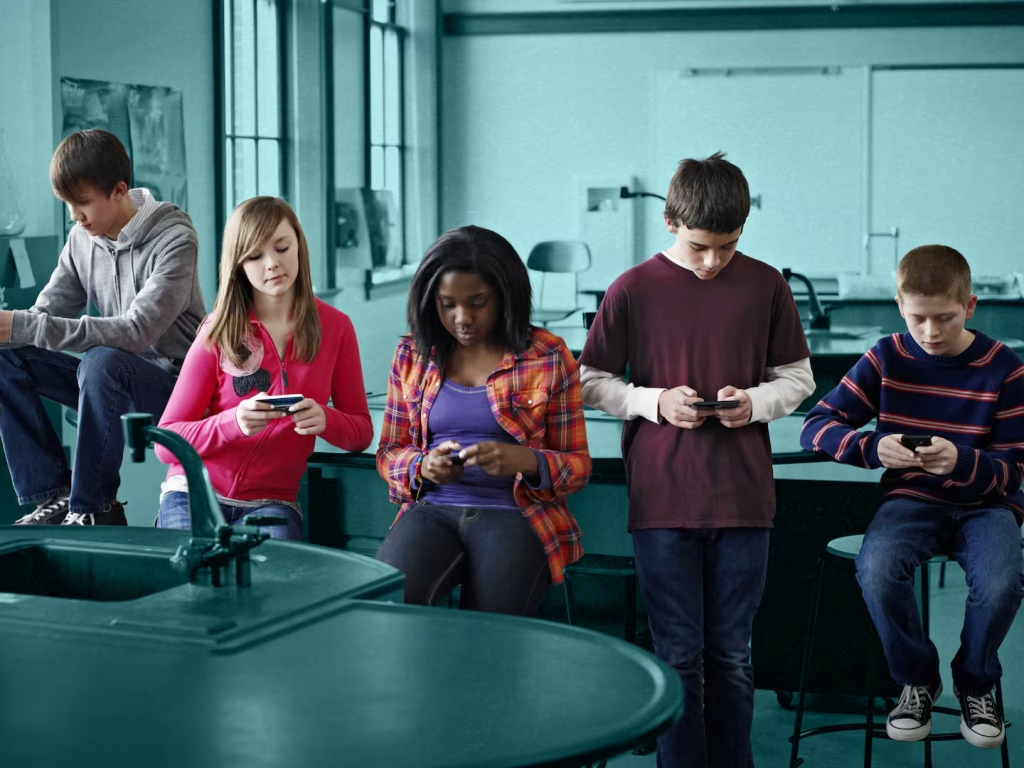
Research has shown that social media platforms can weaken attention spans, leading to spikes in anxiety and sleep deprivation among teenagers. With countless studies indicating that today’s youth face unprecedented levels of stress—often manifesting in lower test scores and troubling political divides—this ban may represent a turning point. Consider this: students in the UK and the U.S. are consistently
trailing behind their international peers, not just in academics but in crucial skills like critical thinking and media literacy. By limiting access to platforms that often sidestep genuine discourse in favor of sensationalism, Denmark is taking a commendable stance against a landscape that has fueled confusion and debate.
It’s not just about feeling validated through likes and shares; it’s about nurturing nuanced understanding. With teenagers caught in heated debates over issues they lack the context or maturity to grapple with, the absence of social media could provide a much-needed pause. Imagine a world where students devote time to thoughtful discussions or engaging with academic material instead of mindlessly scrolling
through feeds.
A Spotlight on Parental Responsibility
The proposed age-verification app does more than enforce the ban; it serves as a nudge toward heightened parental engagement. While the thought of technology-savvy parents might elicit some chuckles, it also speaks to a needed awakening in guardianship styles. By motivating parents to take an active role in their children’s online lives, Denmark’s initiative acknowledges that education starts at home. As the digital landscape continues to evolve, we need proactive guardians who can help their young ones navigate the complexities of information consumption.
Imagine parents sitting down with their teens to explore the world of knowledge—sparking discussions around current events, social justice, or science. By encouraging more meaningful interactions over mindless scrolling, parents can cultivate curiosity and critical thinking that is often shunned in a world chasing dopamine hits.
Treading a Fine Line: Managing Complexity
While the ban is undoubtedly optimistic, it also raises the question: where do we draw the line between protection and restriction? Are we raising a generation that thrives on information, or one that learns to fear it? The key lies in balance. This initiative could redefine societal attitudes toward digital literacy—shifting from mere consumption to responsible use. A carefully constructed framework could allow
children to engage with social media in a way that fosters open dialogues on misinformation, political ideologies, and media sources.
Look no further than the U.S. statistics; many adults today struggle to distinguish fact from fiction, illustrating a dire need for critical evaluation skills that seem to be declining rather than improving.
Boosting these capabilities in the next generation may serve as a long-term investment in societal cohesiveness and informed citizenship.

A Global Challenge: Embracing the New Normal
Denmark’s move places it alongside countries like Australia in a proactive attempt to shield youth, yet the coastal winds of change are global. Countries around the world are grappling with these same dilemmas, trying to craft policies that respect individual freedoms while protecting the populace, particularly the vulnerable.
Social media serves as a potent force in amplifying divides, and allowing unregulated access can inadvertently foster ignorance and radicalization. By curbing social media’s reach among younger users, Denmark is also subtly setting a precedent for responsible governance and empowerment of future generations.
Conclusion: A Collaborative Effort Toward Healing
Denmark’s social media ban reminds us that, while digital platforms are integral to our lives, they must be engaged with carefully, particularly by those still honing their analytical skills.
In this light, one might ask: What kind of future do we want to build for our children? If the answer lies in nourishing their ability to critically evaluate information, then perhaps cutting the digital umbilical cord, even temporarily, might just be what we need. As we foster more informed, empathetic individuals, the ripples of Denmark’s brave decision could lead to a shift in the way society engages with technology
itself.
With a focus on cultivating thoughtful dialogues, bridging divides, and combatting ignorance, we could indeed be setting the stage for a more enlightened generation—one that learns to see past the noise and embrace the profound.